 |
 |
 |
|
 |
|
 |
 |
 |
|
 |
 |
 |
|
 |
 |
 |
|
 |
|
 |
|
 |
|
 |
|
 |
|
 |
 |
 |
|
 |
 |
 |
|
 |
|
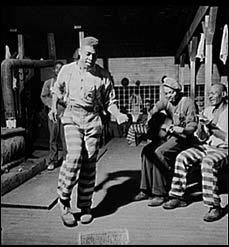
An exhibition that surveys racial taxonomy in American photography
from the 1840s to the present. |
 |
|
 |
|
 |
Photography is the means of recording human likeness that has been
used most often to describe and construct American identity. It has played
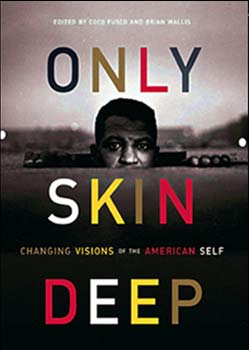
a key role in shaping ideas about race and nation. Only Skin Deep: Changing
Visions of the American Self is the first comprehensive look at how ideas
about race have shaped our understanding of what Americans look like and
the role that photography has played in conveying those messages. |
|
 |
|
For most of our country’s history, access to U.S. citizenship has been
restricted on the basis of race. To this day, evolving theories about race
inform our ideas about who Americans are and what they look like. Most people
these days realize that there is no scientific basis for race and that there
is no real proof of any group's racial inferiority. Nonetheless, race remains
with us as a very compelling myth. It is part of our American heritage. It
has been one of the most important and powerful means of determining who is
and who is not considered American, and who should be entitled to the full
benefits of American citizenship.
Photography has been the most effective form of image making for
supporting and debunking the myth of race. |
|
 |
|
 |
 |
 |
|
 |
|
 |
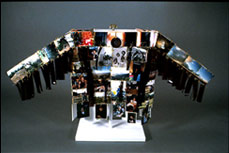
It is often assumed that shows about race are really nothing more
than shows about racism, in which photographers demonstrate that they are
either racist or that they are against racism. This show explores racial
imagery in a different way. Regardless of whether one believes that racism
persists in American society, it is undeniable that racial iconography still
circulates in our culture and, thus, in American photography as well. The
exhibition is divided into five
sections that look at race as a distinct set of visual symbols that
are manifested through a variety of photographic techniques. Taken altogether,
Only Skin Deep is about how photography works to make us “see” race. |
 |
|
 |
|
 |
 |
 |
|
 |
|
 |
 |
|
 |
|
 |
 |
 |
|
 |
|
|
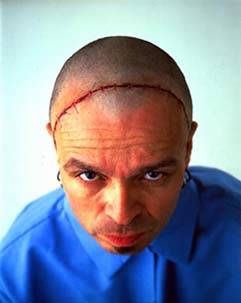
The images in this category promote the idea that racial hierarchies
are based in truth, or they subvert this assertion through irony
and parody. When photography was introduced in 1839, the notion that humanity
was organized
in a racial hierarchy was widely accepted in the United States.
According to this worldview, the diversity of human beings’ physical
characteristics was taken as evidence of the “fact” of racial
difference. Scientific racism attempted to link physical traits with invisible
group characteristics
such as intelligence or a propensity for social deviance. This
view, often associated with eugenics, remained firmly entrenched until the
mid-twentieth
century, when its use by the Nazis compelled the international
scientific community to formally repudiate it. Nonetheless, the legacy of
these nineteenth-century ideas about race lives on: we still
speak of race as synonymous with differences based on skin color
or human typologies. |
 |
|
 |
|
 |
 |
 |
|
 |
|
 |
 |
|
 |
|
|
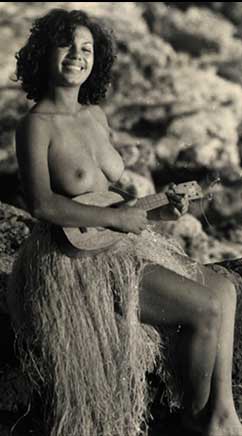
The photographs in this category suggest that some people can stand
for all Americans or can embody an "ideal" American, while others
can only represent specific ethnic or racial types. Over the past 150 years,
numerous photographers have created images that “stand for” American
ideals, showing us what “good” Americans look like and identifying
those who do not belong in this category. Photographers were often enjoined
to catalogue specific racial and ethnic types, in keeping with popular theories
about human diversity. While many photographs of ethnic types were produced
for anthropological studies and military and state records, this sort of
imagery has also been extremely popular as mass entertainment and has regularly
found its way into advertising, fashion, and art. Many contemporary artists
have reflected on this legacy by recalling and recasting photographic techniques
that were developed in the nineteenth century to communicate these ideas. |
|
 |
|
 |
 |
 |
|
 |
|
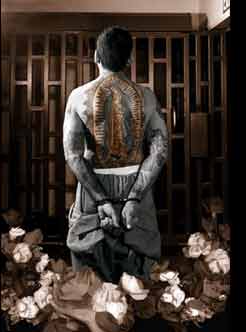
This group of images contrasts photographs
designed to emphasize a subject's individuality with those that objectify
their subjects, replacing things for people or treating people like things.
To promote racial equality or to reveal injustices, photographers have sometimes
produced “positive images” to counter denigrating popular representations
of ethnic groups. These works are often designed to elicit the sympathies
of viewers by "humanizing" their subjects, making them appear to
be more attractive, more patriotic, or more industrious. These attempts to
elevate and humanize photographic subjects stand in contrast to images of
people posed in ways that make them look like objects, such as sculptures,
toys, or monsters. The act of substituting an object for a person evokes
the idea of the fetish, in the sense that an inanimate thing is made to represent
a living being. This gesture reinforces the notion that race is
something fixed and concrete, rather than a compelling but fluctuating
fiction. |
 |
|
 |
|
 |
 |
 |
|
 |
|
 |
 |
 |
|
 |
|
|
American culture is rife with examples of people's desire to adopt
another racial identity or to temporarily masquerade as a member of another
race. However, the capacity to transform one’s appearance takes on
different meanings depending on the status and identity of the subject.
In some cases, the gesture is meant to suggest the individual’s ability
to transform himself or herself; in others contexts, it has been motivated
by larger social and political agendas. With the adoption of the American
myth of the melting pot in the early twentieth century, for example, an
official policy of assimilation was applied to immigrants and ethnic minorities.
Donning costumes that caricatured members of nonwhite groups as savage,
excessively emotive, irrational, and oversexed, the people who posed for
these photographs expressed commonly held notions of the “wild side” of
the self suppressed by Western rationalism and social rigidity. |
 |
|
 |
|
 |
 |
|
 |
|
 |
 |
|
 |
|
|
This part of the exhibition also extends the question of race beyond
the body into space, showing how ideas about race can be projected onto
natural and man-made landscapes. The prevailing ideas about race in the
nineteenth and early twentieth centuries conflated human evolution with
technological advancement. This worldview, known as Social Darwinism, suggested
that the greater military and industrial power of Europeans was evidence
of their racial superiority and implied that their ability to dominate others
was evidence of their heightened capacity for survival. The visualization
of Social Darwinist ideas often involves demonstrating how some racial groups
represent progress and America's future, while others are designated as
throwbacks that evoke a preindustrial past that is often both romanticized
and infantilized. |
|
 |
|
 |
 |
|
 |
|
 |
|
 |
 |
|
 |
|
|
|
|
|
|
|
|
|
|
|
|
|
|
|
|
|
|
|
|
|
|
|
|
|
|
|
|
|
|
|
|
|